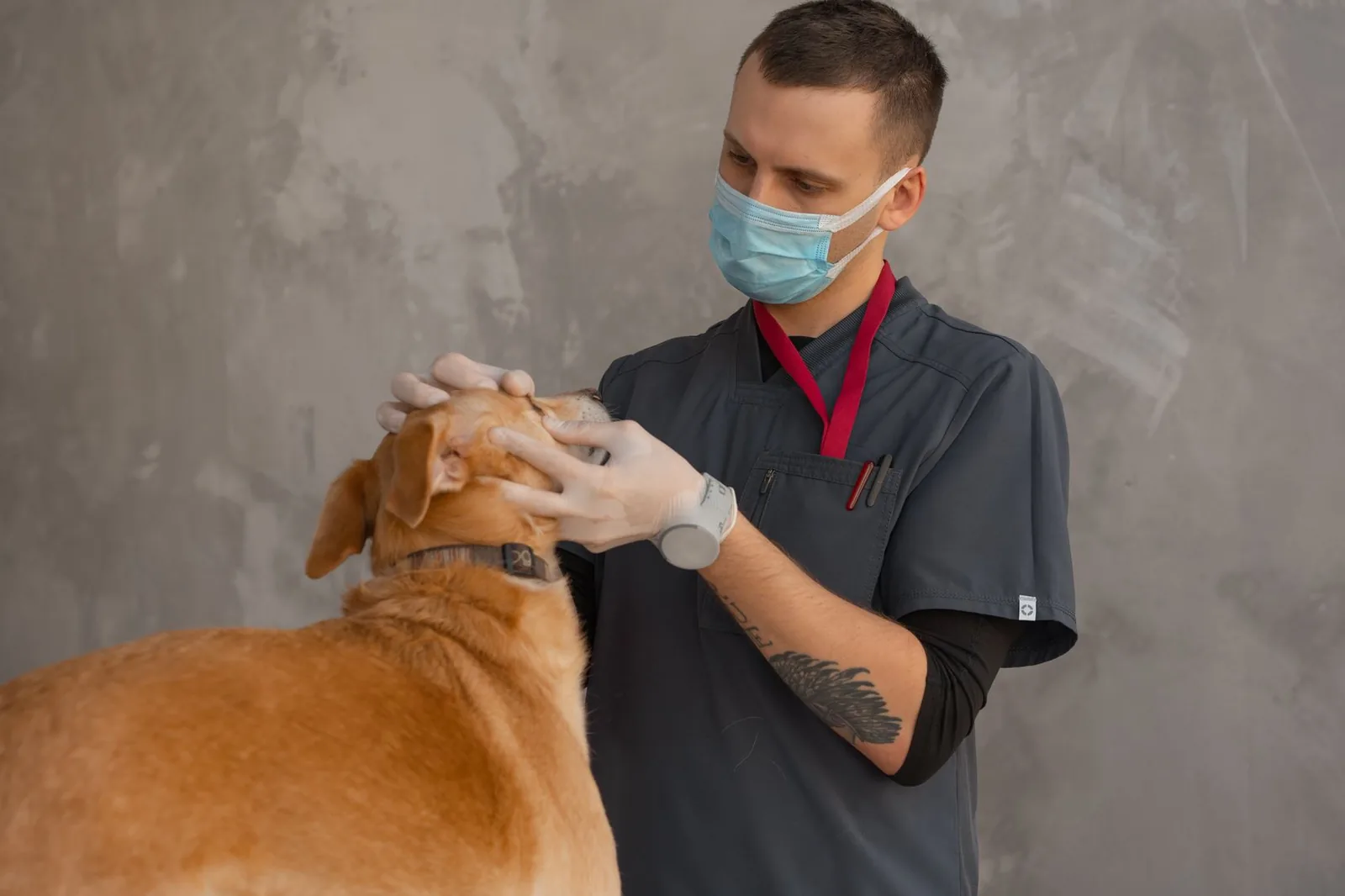
Looking for a veterinary accountant near you?
Most practice owners start by searching for an accountant nearby, and the honest answer is that
proximity stopped being the thing that matters. We are remote-first across the whole
United Kingdom: everything runs over video, phone and email, scheduled around consulting hours rather
than ours, with records, questions and approvals handled securely online. What you gain by widening
the search past your postcode is a practice that works only with veterinary
businesses, so nobody has to be told what a POM-V is, why premises registration is charged per branch
rather than per practice, or what a cap on written prescription fees does to a dispensary.
One regulator, one Order, four nations
This is the part that most general advice, and most of what an AI assistant will tell you, gets
backwards. The RCVS regulates veterinary surgeons and veterinary nurses across the whole
United Kingdom — and it does not regulate the businesses they work in anywhere in it,
because it has no statutory power to. Non-vets have been able to own a UK veterinary practice since
1999, and the Practice Standards Scheme is, in the RCVS's own words, a voluntary accreditation. The
compulsory registration is of premises that store or supply medicines, on the
Register of Veterinary Practice Premises, charged per premises and renewing 1 April, with every
branch registered separately.
The CMA's remedies are UK-wide as well. Draft Article 1(3) of the Veterinary Services Market
Investigation Order 2026 states in terms that this Order extends to England and Wales, Scotland
and Northern Ireland. So the published price lists, the parasiticide list, pet care plan
disclosures, written estimates where the cost is reasonably likely to reach £500 including VAT,
itemised bills, the prescription fee cap and the complaints package reach a practice in Belfast on
the same terms as one in Bristol. The Order has not been made: the CMA published its final report on
24 March 2026 and its own deadline for putting the Order in place is 23 September 2026, which is a
drafting deadline rather than a date anyone has to comply by. The obligations follow three to twelve
months after the Order is made, and a Small Veterinary Business — fewer than 15 first opinion
practices and out-of-hours centres, which almost every independent is — gets three months
longer on most remedies, though not on all of them.
Which leaves three things that genuinely change with the nation you practise in. Not the
regulator, and not the remedies.
Northern Ireland: the medicines rules are different
This is the largest real difference in the United Kingdom and it is easy to miss. Under the
Windsor Framework, EU Regulation 2019/6 on veterinary medicinal products applies in Northern
Ireland rather than the Great Britain Veterinary Medicines Regulations 2013, with EU
Regulation 2019/4 covering medicated feed; both jurisdictions also apply Regulation (EC) No 470/2009
on residue limits. The consequence a practice feels every day is prescription validity. In Great
Britain a written prescription is valid from the date of signing for up to six months as standard, or
28 days for a controlled drug. In Northern Ireland a prescription for an antimicrobial or an
antibiotic is valid for only five days from the date of issue. That is a real operational
difference, and it interacts with the CMA's draft Article 15, which will require a written
prescription in hard copy by the end of the consultation or digitally within 48 hours.
Scotland: income tax is different
Scottish rates and bands, set by the Scottish Parliament, apply to non-savings,
non-dividend income, and they follow where a person lives rather than where they work
— gov.uk states it without qualification: you pay Scottish Income Tax if you live in Scotland.
So a Scottish practice owner's profit share, and a Scottish director's salary, are taxed on a
different scale from an identical practice owner's in England. What is not devolved is
everything else, and those are the figures we will state: National Insurance, with Class 4 at 6%
between £12,570 and £50,270 and 2% above; dividend tax at 10.75%, 35.75% and 39.35% from 6 April
2026 with a £500 allowance; and corporation tax at 19% up to £50,000 and 25% above £250,000, with
the limits divided by one plus the number of associated companies. An incorporated Scottish practice
therefore has one leg of its extraction arithmetic on the Scottish scale and the other on the UK one,
which is why an English worked example gives it the wrong answer. Try the
incorporation calculator and then have the figures
checked properly.
England: business rates are different
England moved to five multipliers on 1 April 2026: a standard 48.0p, a small business rate of
43.2p where the rateable value does not exceed £50,999, two lower Retail, Hospitality and Leisure
multipliers of 43.0p and 38.2p, and a high-value multiplier of 50.8p where the rateable value
reaches £500,000. Two points matter for a practice. A veterinary practice is not a Retail,
Hospitality and Leisure property, so it never pays the lower two — which means the
coverage framing April 2026 as a rates cut for high-street premises was not written about you. And
all five figures are England only. Wales sets its own multipliers and reliefs
through the Welsh Government and ran its own revaluation taking effect on 1 April 2026; Scotland's
rates and reliefs are set by the Scottish Government; and Northern Ireland has nothing of the kind
— a regional rate set by the Northern Ireland Executive plus a district rate set by each of the
eleven district councils, applied to Net Annual Value and collected by Land and Property Services.
Wales: devolved, but not where people expect
Wales is the case worth being careful about, because the temptation is to manufacture a
difference. There is not one in the places that would matter most: the RCVS regulates vets and nurses
in Wales as everywhere, the Veterinary Medicines Regulations 2013 apply across Great Britain so
prescription validity is the Great Britain position, the CMA Order extends to Wales, and income tax
uses the same rates and bands as England and Northern Ireland. The £38 premises registration fee is
published for England and Wales together. What is devolved is business rates and animal health and
welfare policy, where the Senedd and the Welsh Government legislate separately.
Everything else is the same wherever you are
Corporation tax, VAT, National Insurance, payroll and auto-enrolment, Companies House filing,
Making Tax Digital for Income Tax for a self-employed locum, capital allowances on equipment and
Business Asset Disposal Relief at 18% from 6 April 2026 are all UK-wide. So is the thing most
practices actually want fixed: knowing what a consultation costs to deliver before a price list has
to be published. Start with the CMA compliance and pricing
page, the profitability calculator or the
prescription fee modeller. Not on the list below? We act
for veterinary businesses right across the UK — get in touch and we
will tell you where you stand.