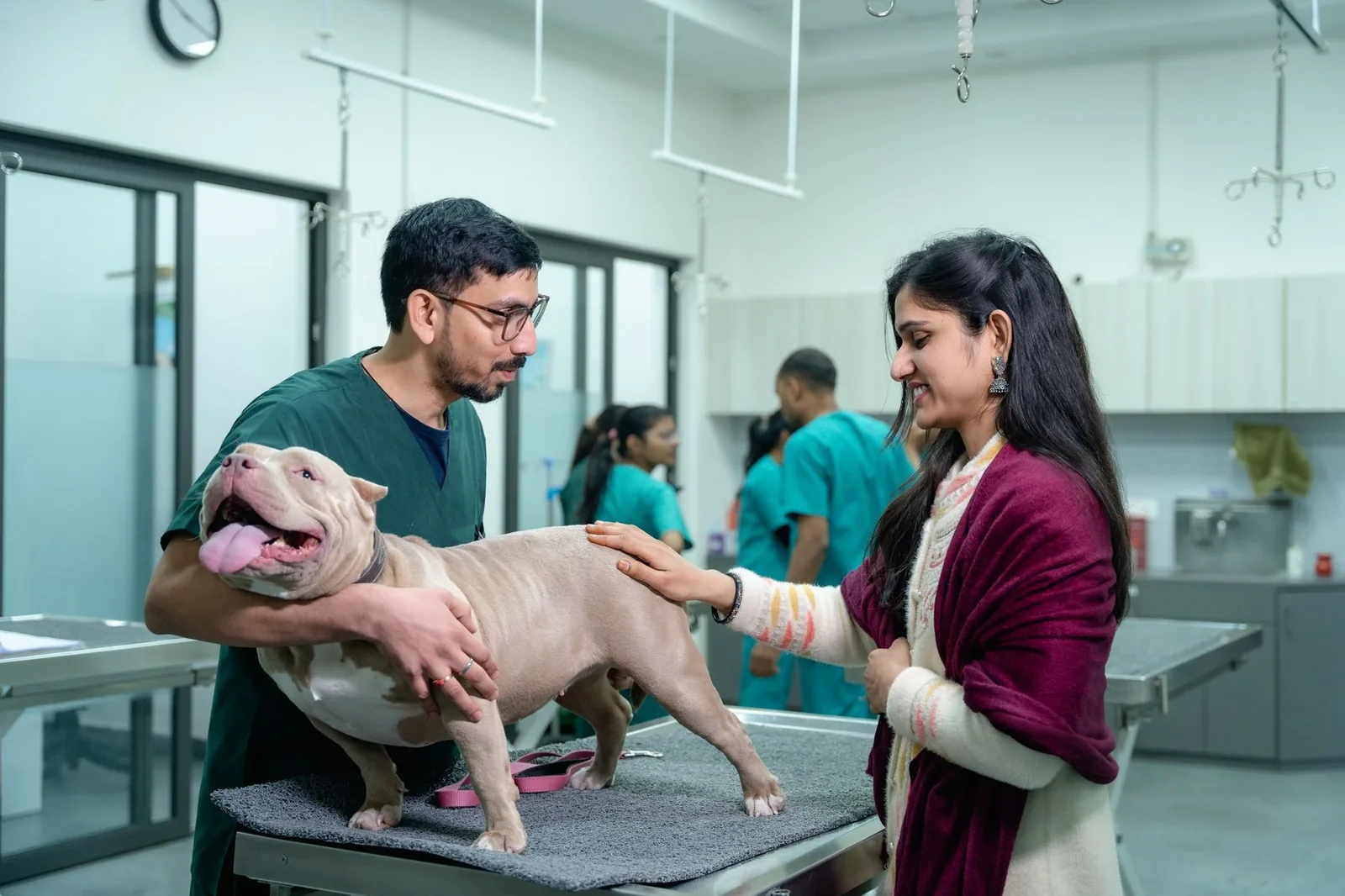
Which means you own the pricing, the payroll, the premises registrations and every obligation the CMA's Order is about to put on veterinary businesses. Here is the whole load, in the order it reaches you, with the arithmetic done first.

Read the trade coverage and the CMA's veterinary market investigation sounds like a punishment. Read the draft Order and it is a work programme: nineteen articles, most of which require you to write something down, publish it, and keep a record. The pricing remedy that gets the headlines — a cap on written prescription fees — is one article out of nineteen, and for a Small Veterinary Business it is the one with the longest runway.
The sequence is what matters. The final report was published on 24 March 2026, which ended the investigation. The CMA then has six months to make the binding Order, so the Order must be made by 23 September 2026. That is the CMA's own deadline for putting the Order in place; it is not a date on which anything happens in your practice. Your obligations run from the day the Order is made, on windows of three, six, nine or twelve months depending on the remedy and on whether you are a Large or a Small Veterinary Business. The dividing line is 15 first opinion practices or out-of-hours centres, so almost every independent practice in the country is Small.
The one thing not to do is generalise the extra time. The CMA's news release says smaller businesses get three months longer on most of the remedies, and that is true — but on the prescription fee cap the gap is six months against twelve, and on ownership information and the entire complaints package there is no gap at all. Two provisions have no window whatsoever: the twelve-month cap on notice periods in outsourced out-of-hours contracts and the restriction on termination fees take effect on the day the Order is made.
“This Order shall come into force on the day after the Order is made.” Article 1(3) extends it to England and Wales, Scotland and Northern Ireland — so no practice in the UK is outside it.
What that adds up to, for most independent principals, is 2027 — with a genuine opportunity in front of it. The practices that model their pricing before they publish it will publish a price list they have chosen. The practices that leave it will publish the one they happen to have.
The publication duties
Most reporting collapses this into "publish your prices". The draft Order contains four distinct publication duties and they have different content, so building one and assuming the others follow is how a practice ends up doing the work twice.
Article 5 sits alongside them and is about ownership rather than price: the identity of the owner, on signage, at the premises, on the website and in communications. It carries a six-month window for large and small businesses equally. For an independent that article is close to free — you already are what you say you are. For the six corporate groups it is the article that changes the shop window.
The CMA's own baseline is the reason this exists. Of the first opinion practice websites it reviewed, 84% had no pricing information at all. It also found average prices at veterinary businesses grew 63% between January 2016 and December 2023 against 32% CPI. A practice that publishes a considered, defensible price list ahead of the deadline is not conceding anything — it is being early into a market where almost nobody has ever had to compete on a published number.
The weight bands are the part worth modelling first, because they are where a published list can quietly cost you money. A single figure for "spay" across a 4kg cat and a 45kg dog is unpublishable in the sense that it will either overprice the cat or underprice the dog. Our profitability calculator gives you the margin you are working from, and the pricing guide goes through how to build the bands without giving your position away.
Estimates, bills and clinical freedom
Draft Article 11 requires a written estimate of the cost of the recommended treatment pathway wherever that cost is reasonably likely to be £500 or more including VAT. The threshold is defined in the Order as the Initial Monetary Threshold and, unlike the prescription fee figures, it is not bracketed — it is a firm £500. The estimate must then be updated in writing whenever the cost is likely to increase by 20% or £500, whichever is lower. Emergencies are the only exception.
Read that update trigger carefully, because it is stricter than it first looks. On a £600 estimate the trigger is 20%, so £120. On a £4,000 estimate the trigger is £500, not £800. In a referral-heavy or orthopaedic caseload that is a rewrite in the middle of a working day, which makes it a process problem rather than a pricing one: it needs a template, a named person and a place where the reissued estimate is recorded.
Article 12 requires itemised bills identifying the components of what you provided — individual medicinal products, goods and services, and any outside-services charges. Article 13 requires written policies ensuring that vets and veterinary nurses can act in accordance with their RCVS Codes, which is the CMA's answer to the concern that commercial targets can crowd out clinical judgement. Articles 14 to 17 cover pet owner awareness of written prescriptions, the provision of a written prescription itself — hard copy by the end of the consultation or digital within 48 hours — a standard flyer for animals on ongoing medication, and disclosure where a medicine is your own brand.
Article 20 covers end of life: cremation options and prices must be given, and you must offer a basic communal cremation option. Article 10 requires you to submit data to the RCVS for its Find a Vet service, on the longest clock in the Order — three months after the RCVS complies with its own Undertakings, or twelve months from the Order, whichever is later.
Complaints
Articles 21 to 23 are the part of this package a lot of practices have not registered at all, and they carry no small-business concession: six months for everybody.
The eight-week response is the deadline that reorganises a small practice's week, because a clinical complaint usually needs the clinician involved and the clinician is consulting. The five-day acknowledgement is the easy win: it is a template and a diary rule, and it is also the single most effective thing for stopping a complaint escalating.
None of this is regulatory advice and we are not the people to give it. What we do is the money side: what the process costs to run, where it sits in the payroll, and how the complaint log interacts with the records you already keep. Where a question is really about the Code of Professional Conduct, the RCVS is the right source and we will say so.
The running cost
Four separate lines, and only one of them is new.
| Cost | Amount | Basis |
|---|---|---|
| RCVS levy — set-up | £150–£250 per practice | The CMA's current estimate. Sized by the number of first opinion practices you own |
| RCVS levy — annual | £450–£550 per practice | The CMA's current estimate of the RCVS's ongoing monitoring costs |
| Premises registration | £38 per premises a year | Register of Veterinary Practice Premises, held by the RCVS for the VMD. Renews 1 April. VAT exempt. Every branch separately. England and Wales figure |
| Practice Standards Scheme | Voluntary | Not required. Assessment every four years; its medicines module exempts the premises from a separate VMD inspection. PSS fees carry 20% VAT |
Underneath those sit the obligations that cost time rather than money: an audit of your POM-V and POM-VPS supply at least once a year, and five-year retention of the receipt and supply records — date, medicine, batch number, quantity, name and address of supplier or recipient, name and address of the prescriber, and a copy of the prescription where one was written. Where a POM-V or POM-VPS is prescribed without a written prescription, the reason has to be recorded and kept for five years too. The annual audit is the item with no external prompt, which is exactly why it is the one that slips.
A practice on a 20% EBIT margin can absorb a repriced prescription line and a compliance programme. A practice on 4% cannot, and the difference between those two practices is rarely clinical.
There is one credible published benchmark for independent practices, and it comes from the CMA itself: a sample of 36 small independent veterinary firms, whose EBIT margins ran from minus 9% to plus 34% across 2021 to 2023, with a weighted average of 11% — 15% in 2021, 12% in 2022, 9% in 2023. The top sextile averaged 28%, the bottom 0%, and 24 of the 36 saw their margin decline across the three years. Excluding the two firms with large-animal work made no difference to the averages. The six large groups averaged 14%.
An illustrative example. A practice turning over £1.2 million with £96,000 of EBIT is on an 8% margin — below the 11% weighted average, and roughly a third below it. Getting to 11% on the same turnover means £132,000 of EBIT, so the gap is £36,000 a year. That is the frame to put the prescription fee question inside: if repriced prescriptions cost that practice £15,000 of revenue, it is a large share of a £36,000 gap and a small share of the turnover. These are illustrative figures, not a benchmark for your practice.
Run yours through the profitability calculator, then put your own prescription volumes and current charge into the prescription fee modeller. The CMA found current charges starting around £10, with significant numbers of practices over £30 and some well above that — so the size of the change varies enormously between practices that look similar from the outside.
Non-vets have been able to own a UK veterinary practice since 1999, and the RCVS has no statutory power to regulate the businesses vets work in — only the individual veterinary surgeons and veterinary nurses on its registers. The Practice Standards Scheme is, in the RCVS's own words, a voluntary accreditation.
The CMA identified exactly this in its final report of 24 March 2026: that the system of regulation applies only to veterinary professionals and not to the businesses in which they work.
If your practice supplies or stores medicines you must register the premises with the RCVS, which holds the Register of Veterinary Practice Premises on behalf of the VMD. The fee is per premises — a main site and two branches is three registrations — at £38 a year in England and Wales, VAT exempt, renewing on 1 April.
Defra's consultation on reforming the Veterinary Surgeons Act 1966 closed on 25 March 2026 and proposes licensing veterinary businesses. The response has not been published and nothing is in force.
One team for the bookkeeping, the accounts, the tax, the payroll and the price modelling — rather than three suppliers who each assume somebody else looked at the margin.

Price lists by weight band, the parasiticide list, pet care plan disclosures, the £500 estimate threshold and itemised bills — modelled against your profit and loss before you publish anything.
What has to change
Annual accounts, the corporation tax or partnership return, VAT, and management figures early enough to change a decision rather than explain one.
Accounts and tax
Vets, nurses, reception and support staff, employer National Insurance at 15% above £5,000, the £10,500 Employment Allowance, and the April 2026 National Living Wage.
Practice payroll
Sole trader, partnership or company, on 2026/27 rates including the 6 April 2026 dividend rise and the associated-companies divisor most comparisons ignore.
Sole trader or company
How Xero sits alongside your practice management system, and the set-up that lets you see margin by service line rather than a single revenue figure.
Xero for practices
A partner buying in, a corporate approach, or the exit you have spent a career earning — modelled before you answer the email.
Selling a practiceYes, once the Order is made and your implementation window has run. Draft Article 7 requires a comprehensive standard price list covering consultations, preventative care, prescriptions and dispensing, procedures, treatments, diagnostics and laboratory tests and end-of-life care, priced by weight band: cat or small dog under 10kg, medium dog 10 to 25kg, large dog over 25 to 40kg, extra-large over 40 to 60kg and giant over 60kg. Article 8 adds a separate parasiticide price list. A Small Veterinary Business, meaning fewer than 15 first opinion practices, has six months from the Order rather than three.
The figure is not settled yet, and anyone quoting you a hard number is quoting the wrong document. The final report of 24 March 2026 set a maximum of £21 including VAT for the first medicine prescribed in a consultation and £12.50 for each additional medicine in the same consultation. In the draft Order both figures sit inside square brackets, to be adjusted for inflation between 24 March 2026 and the latest monthly CPI figure available before the Order is made, and indexed annually after that. So plan on a figure a little above £21, and model the range rather than a point.
The CMA's current estimate is no more than £150 to £250 per practice to cover the RCVS's initial set-up costs, and £450 to £550 a year per practice for its ongoing costs. The levy is sized by the number of first opinion practices you own, and the detail sat in the separate draft Funding Order, whose consultation closed on 30 July 2026. It is a new cost line rather than a replacement for anything: your premises registration at £38 per premises a year continues alongside it, as does the Practice Standards Scheme fee if you choose to stay accredited.
It does, and it is one of the few numbers in the package that is already firm. Draft Article 21 requires an in-house complaint process that acknowledges a complaint in writing within five working days and gives a full response within eight weeks, with the process itself published and the RCVS complaints decision tree displayed. Article 22 requires a complaint log and Article 23 requires you to engage in mediation in good faith once the in-house process is exhausted. Note that the whole complaints package carries a six-month window for large and small businesses alike — there is no extra time here.
There is one credible published benchmark and it is wider than most people expect. The CMA examined 36 small independent veterinary firms and found EBIT margins ranging from minus 9% to plus 34% over 2021 to 2023, with a weighted average of 11% — 15% in 2021, 12% in 2022 and 9% in 2023. The top sextile averaged 28% and the bottom 0%. Twenty-four of the 36 saw their margin fall across the three years. The six large groups averaged 14%. Our profitability calculator places your own figure against that spread.
Yes. The obligations fall on a Veterinary Business, and a sole first opinion practice is one — it is simply a Small Veterinary Business, with fewer than 15 first opinion practices or out-of-hours centres, so it gets the longer implementation window on most remedies. One piece of relief does apply to the smallest businesses: the final report says the CMA will not require them, which it puts at 70% of all veterinary businesses, to provide an annual attestation to the RCVS. They still have to meet the requirements of the Order itself. The CMA's guidance also excludes charitable providers.
A free practice review: your margin against the CMA's own sample of independent practices, your written-prescription revenue at a capped fee, and a straight answer on what to fix first. If there is nothing worth changing we will say so.
One short email: what has moved on the CMA remedies, the dates coming up, and one number worth checking in your practice. No spam, unsubscribe any time.